When people think of Scotland, one of the first images that comes to mind is traditional Highland dress. From kilts to tartan plaids, this distinctive style has become a powerful symbol of Scottish identity.
But what did Highlanders really wear, and how did this style develop over time?
Early Highland Dress
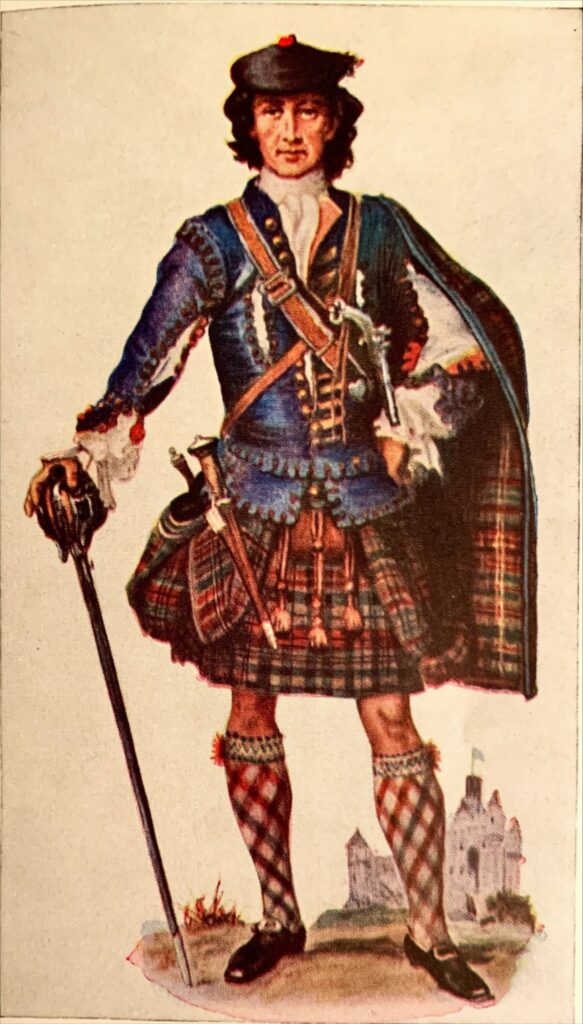
An early representation of Highland dress showing the belted plaid and traditional styling.
In earlier centuries, Highland dress was both practical and distinctive.
One of the most important garments was the belted plaid, a large piece of tartan cloth wrapped around the body and secured with a belt. It could be arranged in different ways, providing warmth and flexibility.
This early style was well suited to the rugged Highland landscape and changing weather conditions.
The Development of the Kilt
Over time, Highland dress began to change.
The large belted plaid was gradually adapted into the kilt, a shorter and more practical garment. This made it easier to wear and more suitable for daily life.
By the 18th century, the kilt had become one of the most recognisable elements of Scottish clothing.
Tartan and Identity
Tartan played a central role in Highland dress.
Different patterns became associated with clans, regions, or regiments. Wearing a particular tartan could show identity, loyalty, or heritage.
Today, tartan remains one of the most important features of Scottish clothing and culture.
Accessories and Details
Traditional Highland dress often included a range of accessories, such as:
- A belt and buckle
- A sporran (a pouch worn at the front)
- A jacket or doublet
- Long socks and shoes
- A plaid worn over the shoulder
Some items, such as crest badges, were used to show loyalty to a clan chief.
Highland Dress in Later Periods
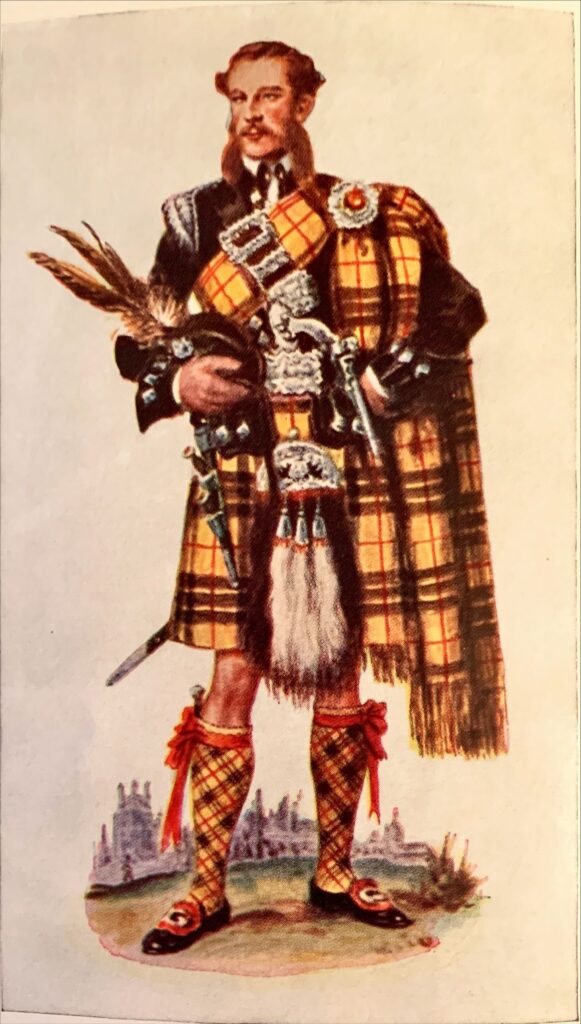
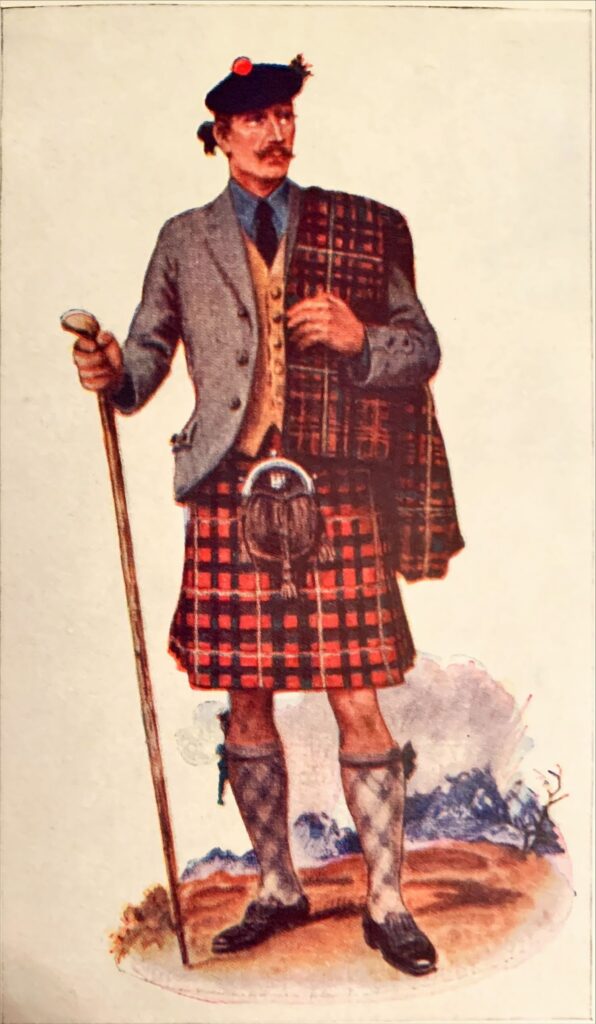
Examples of Highland dress from later periods, showing the development of the kilt.
By the 19th and 20th centuries, Highland dress became more structured and formal.
It was often worn at ceremonies, military events, and special occasions. Although styles changed over time, the key elements—kilt, tartan, and accessories—remained consistent.
Why Highland Dress Still Matters Today
Today, Highland dress is worn not only in Scotland but around the world.
It is commonly seen at weddings, cultural events, Highland games, and formal occasions. It continues to represent Scottish heritage and pride.
Final Thoughts
Traditional Highland dress is more than just clothing. It reflects history, culture, and identity.
From the practical belted plaid to the modern kilt, this style has evolved over centuries while remaining a powerful symbol of Scotland.
Next article: Jacobite Tartan: History and Meaning
Discover more from curiousshed.co.uk
Subscribe to get the latest posts sent to your email.