
The Armstrong clan is one of the most well-known families from the Scottish Borders, an area with a long history of conflict and strong clan identity.
Unlike many Highland clans, the Armstrongs were closely associated with the Border regions, where life was often shaped by warfare, raids, and shifting loyalties.
Origins of the Name
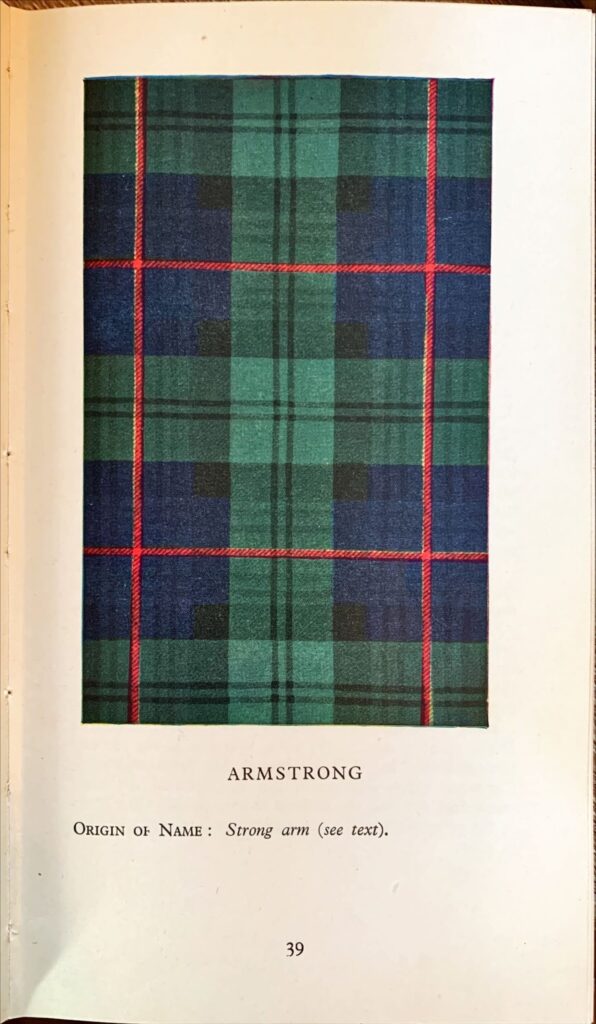
A historical reference showing the Armstrong clan and its tartan.
The name Armstrong is commonly believed to mean “strong arm.”
According to tradition, the name was given to a man who showed great strength and loyalty by helping a Scottish king in battle. This story reflects the importance of bravery and personal reputation in early Scottish society.
Early History and the Borders
The Armstrongs became one of the most powerful families in the Scottish Borders, particularly in areas such as Liddesdale.
Historical records show that Border clans were already recognised as organised groups by the 16th century. The Armstrongs were known for their strength and influence, often controlling land and commanding large numbers of men.
Life in the Borders was very different from the Highlands. Raiding and conflict were common, and clans needed to defend their territory and maintain their power.
Clan Power and Conflict
The Armstrongs developed a reputation as a warlike and independent clan.
At their height, they were said to be able to gather thousands of fighting men. Their activities, including cattle raiding, made them both feared and respected.
However, this power also brought conflict with the Scottish crown. In the 16th century, efforts were made to control the Borders, and many Armstrong leaders were eventually captured or punished.
The Armstrong Tartan
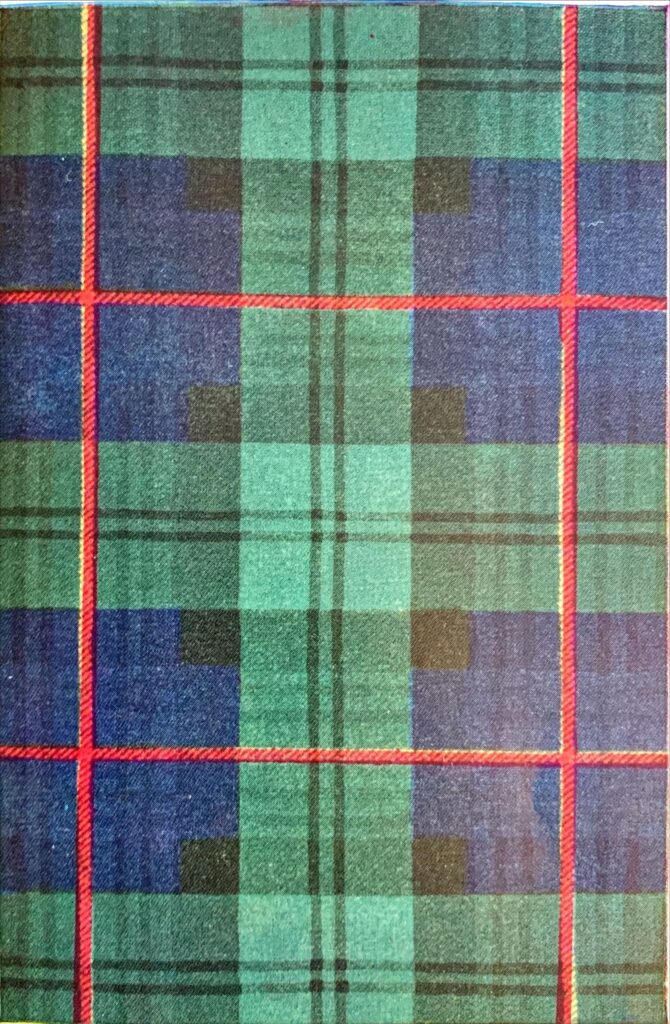
The Armstrong tartan, known for its strong colour contrast and simple pattern.
The Armstrong tartan features a bold and balanced design, often using darker tones combined with strong contrasting lines.
Like many tartans, it represents identity and heritage rather than a strict uniform used in early history. The connection between tartan and clan identity became more formal in later centuries.
Meaning and Identity
The meaning “strong arm” reflects the values associated with the clan—strength, loyalty, and resilience.
Even today, the name Armstrong is linked to a powerful image of independence and determination, shaped by its history in the Borders.
Final Thoughts
The Armstrong clan stands out as an example of the unique culture of the Scottish Borders.
With its strong history, distinctive identity, and recognisable tartan, it represents a different side of Scotland’s clan tradition—one shaped not only by heritage, but also by conflict and survival.
Discover more from curiousshed.co.uk
Subscribe to get the latest posts sent to your email.