
The Anderson clan, also known as MacAndrew in the Highlands, is one of the names found across different parts of Scotland.
While “Anderson” is more common in the Lowlands, the Highland form “MacAndrew” reflects its Gaelic roots. Both names share the same meaning—“son of Andrew.”
Origins of the Name
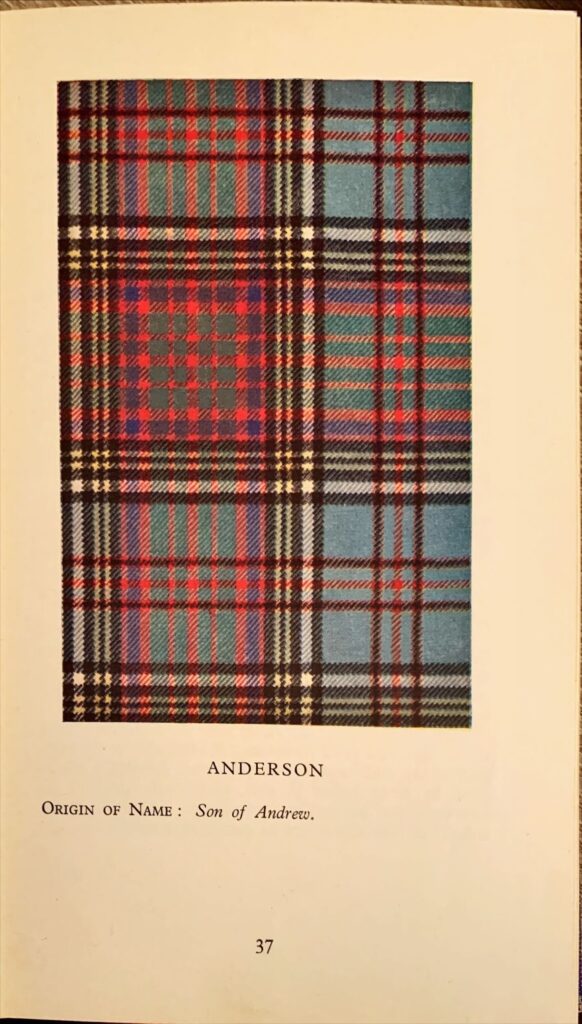
A historical reference showing the Anderson tartan and its origin.
The name Anderson comes from the personal name Andrew, which has been widely used in Scotland for many centuries.
In Gaelic, the name appears as Mac Ghille Aindréis, linking the clan to older Highland traditions and language.
Clan Connections and Early History
Historically, the MacAndrews were considered a sept (a branch) associated with larger Highland clans.
Some records suggest connections with Clan Chattan, a powerful Highland confederation that played an important role in Scottish history.
Early references place the MacAndrews in regions such as Badenoch, where they were part of the Highland community and its complex clan relationships.
Notable Stories and Traditions
Like many Scottish clans, the Andersons have stories passed down through generations.
One traditional account tells of conflicts involving cattle raiding, which was a common part of Highland life in earlier times. These stories often highlight bravery, loyalty, and survival in a challenging landscape.
While not all details can be historically verified, they form an important part of the clan’s identity and heritage.
The Anderson Tartan

The Anderson tartan, known for its distinctive pattern and colour balance.
The Anderson tartan features a balanced mix of colours and lines, forming a distinctive pattern associated with the name.
Like many tartans, it represents identity and tradition rather than strict historical uniformity. Over time, tartans became more formally linked to clan names, especially in the 18th and 19th centuries.
Meaning and Identity
The meaning of the name—“son of Andrew”—reflects a family-based identity rather than a single geographical origin.
This is common among Scottish surnames, where a name can appear in different regions and still share a common linguistic root.
Final Thoughts
The Anderson or MacAndrew name is a good example of how Scottish clans developed over time.
Rather than being a single, unified group, it reflects a combination of language, regional history, and evolving traditions.
Today, the Anderson tartan continues to be worn as a symbol of heritage, identity, and connection to Scotland’s past.
Discover more from curiousshed.co.uk
Subscribe to get the latest posts sent to your email.