
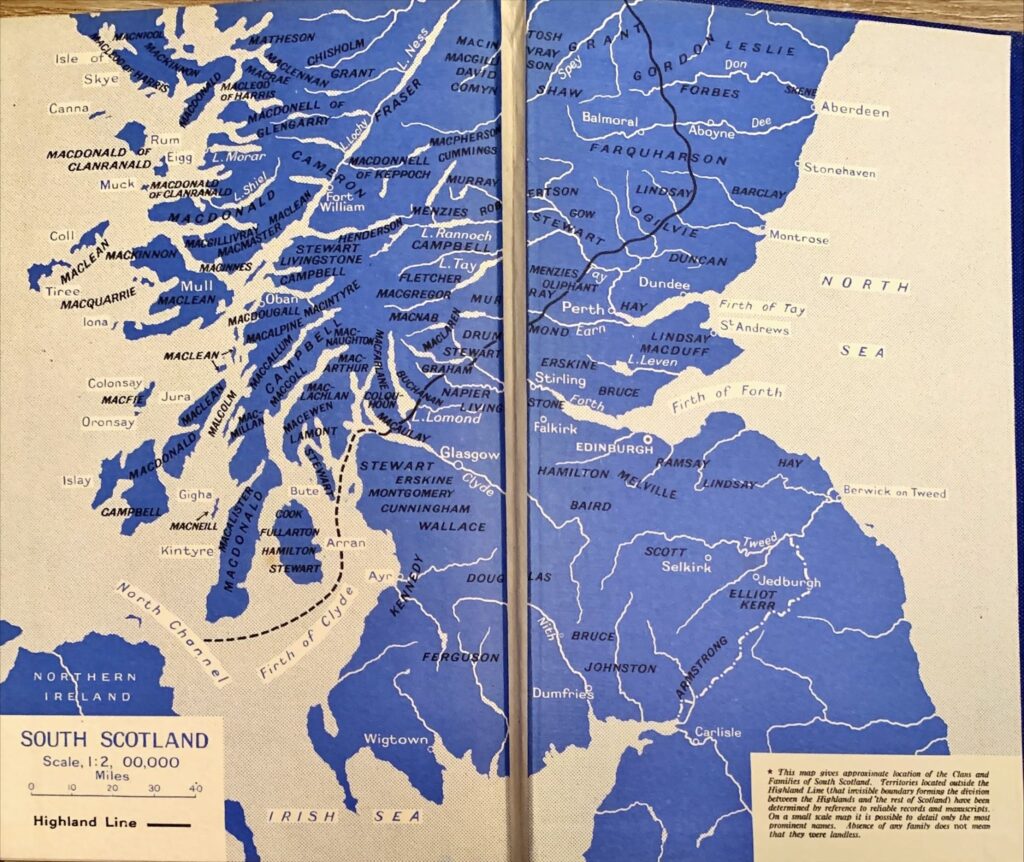
A vintage map showing the distribution of Scottish clans in the Highlands.
What Does “Clan” Mean?
The word “clan” comes from the Gaelic word “clann,” which means family or children.
In Scotland, a clan was not just a family in the modern sense. It was a large group of people connected by name, loyalty, and tradition.
A clan usually included a chief (the leader), extended families, people living on the clan’s land, and supporters.
In simple terms, a clan was like a small community led by one family name.
A Short History of Scottish Clans
Scottish clans were especially important in the Highlands of Scotland many centuries ago.
Each clan controlled its own land and protected its people. Clans sometimes worked together, but they also fought each other.
One famous moment in Scottish history is the Battle of Bannockburn in 1314, where Scottish forces fought for independence. Clans played a major role in these historic events.
Over time, the traditional clan system became less powerful, especially after the 18th century. However, the identity and pride of clans still remain today.
What Is Tartan?
One of the most famous parts of Scottish culture is tartan.
Tartan is a pattern made of crisscrossed horizontal and vertical lines in different colours.
Each clan traditionally has its own unique tartan pattern. These patterns are used in kilts, scarves, clothing, and ceremonial dress.
Today, tartans are a symbol of heritage and identity, even for people living outside Scotland.
Who Leads a Clan?
Every clan has a chief, who is recognised as the head of the clan.
In the past, the chief was responsible for protecting the clan, managing land, and leading in battle.
Today, the role is mostly ceremonial and cultural, but it is still very respected.
Can You Find Your Own Clan?
Many people around the world are interested in finding their Scottish roots.
Even if you are not Scottish, you might share a surname with a clan or discover a family connection.
In future articles, we will show you how to find your clan, identify your tartan, and understand clan names and meanings.
Why Scottish Clans Still Matter Today
Scottish clans are no longer political powers, but they are still important as cultural heritage, family identity, and historical interest.
From Highland games to weddings, clan traditions are still alive today.
Final Thoughts
A Scottish clan is more than just a name. It represents history, identity, and tradition.
Whether you are researching your ancestry or simply curious about Scottish culture, learning about clans is a fascinating journey.
Next article: What Is Tartan? How Scottish Patterns Tell a Story
Discover more from curiousshed.co.uk
Subscribe to get the latest posts sent to your email.